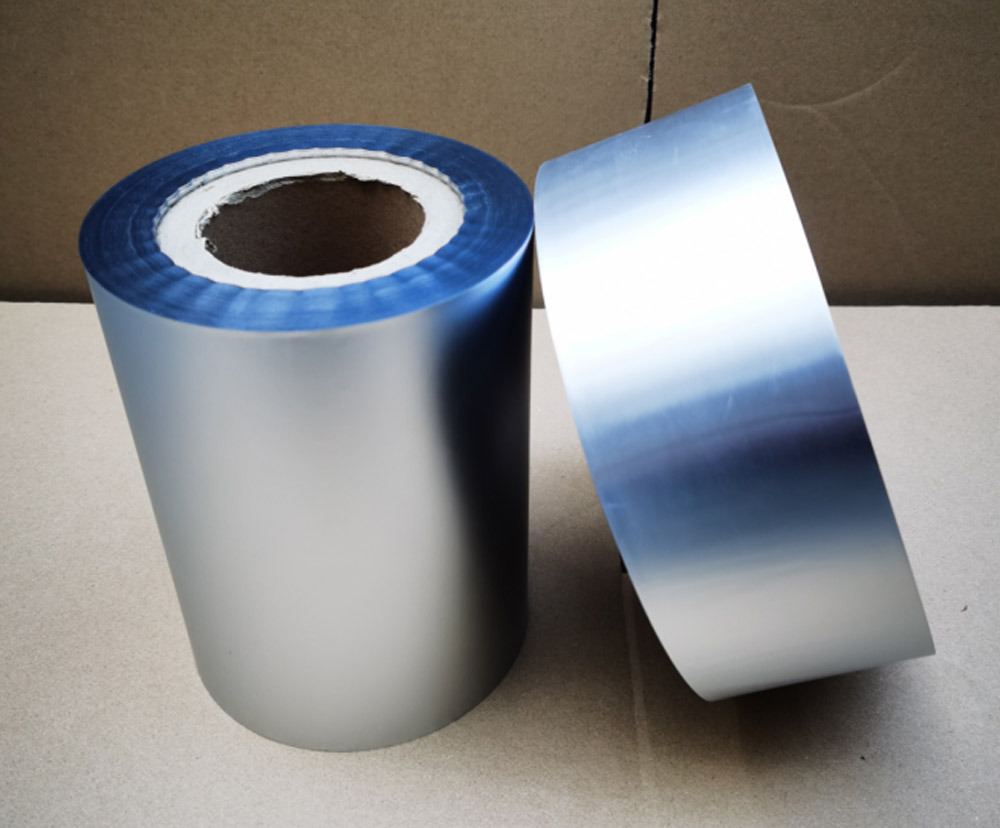
Barrier is a number, not a material. A pack that needs 12 months of shelf life against oxygen ingress and one that needs six weeks are different structures, and specifying "foil" without the target is how a packaging programme ends up either over-engineered or failing.
The three barrier layers we build around
- Aluminium foil. The reference barrier: effectively absolute against moisture, oxygen and light at normal film thicknesses. The cost is weight, opacity and flex-crack sensitivity in a large bag.
- Metallised PET (VMPET). A vacuum-deposited aluminium layer, usually 300–500 Å. Good barrier at a fraction of the cost of foil; the barrier depends entirely on the integrity of the deposited layer, so handling and lamination matter as much as the film.
- EVOH. An oxygen barrier that stays transparent and survives retort where the structure allows it; moisture-sensitive, so it is always buried inside a moisture-resistant layer.
How a barrier structure is specified
Start with the shelf life and the sensitivity of the fill: oxygen, moisture, light, or all three. Then the pack format, because a flat-bottom bag flexes more than a sachet and flex cracking is what destroys a foil barrier in service. Then the retort or pasteurisation cycle, which eliminates some structures outright.
Testing
Oxygen transmission and water-vapour transmission are measured on the finished laminate, not on the base film, and gelbo-flex testing is the honest predictor of what a foil structure will do after a pallet has travelled. Where a customer has a target, the structure is proposed against it and the test data comes with the sample.