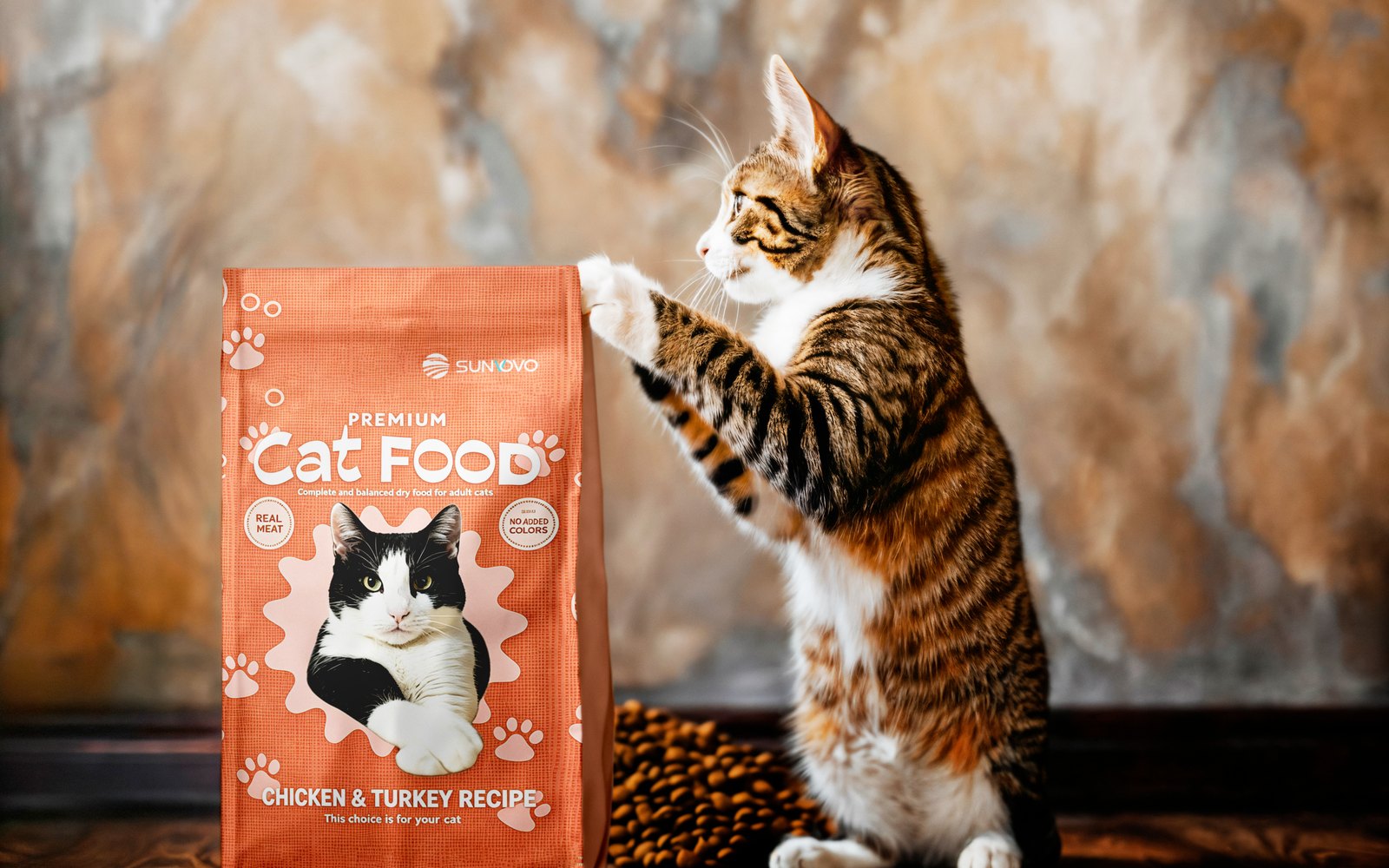
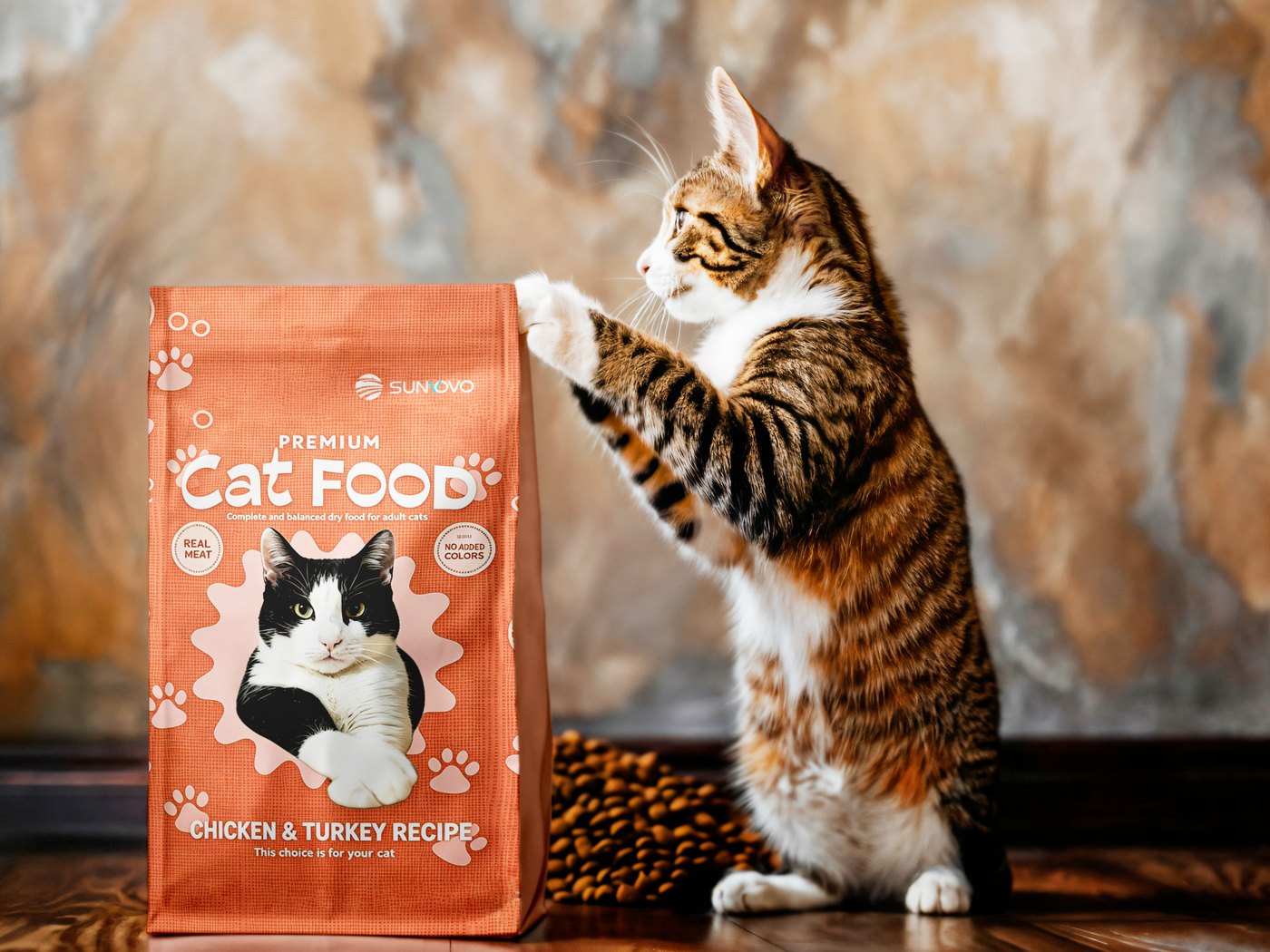
Pet food is a harder packaging problem than human snack food in three specific ways: the fat content attacks the seal and the print, the pack is often opened and closed for weeks, and the retail environment punishes a bag that does not stand up on the shelf.
What the pack has to survive
- Grease and oil migration — through the seal layer and into the adhesive. Visible as delamination and as print lifting at the seams.
- Puncture — kibble edges are sharp; a structure that survives a 250 g snack will not survive a 10 kg bag dropped on a pallet corner.
- Reclosure — a zipper that fails after twenty openings is a consumer complaint, not a packaging defect, but it is the packaging that gets blamed.
- Odour retention — the barrier has to keep the aroma in for the shelf life on the label, not just for the first month.
Formats for the segment
Flat-bottom bags for 2–15 kg kibble, stand-up pouches for treats and wet food, four-side-seal sachets for single-serve, spout pouches for liquids and supplements, and roll film for in-house form-fill-seal lines.
Structures
PET//AL//PE and PET//VMPET//PE for the barrier-critical packs; nylon-containing structures where puncture dominates; mono-PE and MDO-PE for brands moving to a recyclable mono-material pack. Where a brand is switching to mono-PE, the honest conversation is about line speed and seal window, because a mono-PE pack runs differently from the AL laminate it replaces.
Compliance
Materials are selected against FDA, EU 10/2011 and GB 4806 requirements as applicable to the destination market, and the declaration of compliance is issued with the order documents. Certificates are provided per project rather than as a generic download.